Showing posts with label McClain. Show all posts

Wednesday, April 20, 2011

Happy Days - NEW DUCKS ! ! !

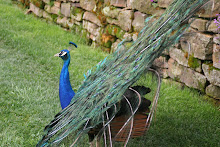
Shawn McClain acquired a few new friends for the duck pond.  I will elaborate on the others later, but today I will focus on my favorite.  Sorry Indian Runners.  The East Indie Duck and Peking friend.  I don't have any beautiful shots yet.  These are just introductory shots.  But I consider this duck to be special, so there are too many pictures to follow!


You want to take pictures of me?

not until

I've done some preening

Come over here and get in the picture!

Tandem Preening


Just a few


more feathers....

Ready for my close up

Get my good side..

Playing Coy

Photo shoot done.  Now I need a drink!

Tuesday, April 12, 2011

Gypsy Moth Quiz Time Girls and Boys.......

So, in continuation of my previous post, after my additional tutorial with Shawn McClain, once again I went in search of the terrible Gypsy Moth Egg Cases.... Dun Dun Dunnnnnn...  Just to give you an idea of the trained eye needed to spot these destructive creatures... here is a little quiz...

Gypsy Moth Egg Case or Cement?????

Ok, it's cement, but I promise it isn't that easy to tell 20 feet up.


Gypsy Moth Egg Case or Mud Dobber????

Ok, it's a mud dobber, but who knew???


Gypsy Moth Egg Case or bad pic of Cool Spider????

Ok, Cool Spider distraction, but he was cool.


 Gypsy Moth Egg Case or Weird hibernating caterpillar????

 Turned out to be a weird hibernating caterpillar.


Gypsy Moth Egg Case or unidentified carcase????

Yes my girls and boys this is a Gypsy Moth Egg Case!


Ok, left out the quiz of is this a Gypsy Moth Egg Case or a rock.  But you can already have guessed, it was a rock.  Ugg.

Here is Shawn McClain, my fearless leader in my Gypsy Moth Egg Case Quest.  He plots their destruction on a map and armed with a Soy Bean oil mixture, he condemns the Egg Cases to death.  My quest continues and as my eyes become trained to their stealth egg laying habits, soon no Gypsy Moth egg case will be safe.  

Thursday, April 7, 2011

Lett-us Plant Pansies

My partner in all good Kathy M and I volunteered ourselves to help out the Kingwood Staff planting seasonal pansies and lettuces.  Shawn McClain made sure the beds were prepared and the soil was fluffy soft.


 Next Bill Collins, Glenna Schaeffer, Charles Applegate and Don Miller laid out the designs.


and now we plant....
Do you want to live here Mr. Pansy?      Grow and thrive!


..with a chill in the air and an excitement to be outside ... we planted the Gazebo area....

We didn't worry about watering.  As Charles Applegate puts it, we would let God water the next day.

What's that Charles? ..a little thing called photosynthesis, means that you cannot bury the plant, the leaves need to be uncovered?  Got it.  Oh the things we learn! 

We moved on to the Old Herb Garden, or Bay Tree Garden or whatever the name of the day is for it.


After a break for lunch, in which Kathy ate fried clams with rice pudding and I had too many hash browns, we continued onto circled fountain area.  We weren't hungry any longer, but with full bellies, we weren't bending over as easy after lunch either.


The day moved on.. so did we, (though we were moving a little slower) up to the formal garden to finish up the beds for a job we considered well done! 

Wednesday, March 30, 2011

Gypsy Moths...

  ... are a real danger to the Kingwood trees.  Yesterday I spent the morning with Shawn hunting Gypsy Moth Egg Sacks.  I had been looking for them around Kingwood by myself with no success, so Shawn took time out of his busy day to hunt along side me until I was skilled in locating the potentially devastating egg sacks.  
We were up at the Gate House to make sure the doors were open for Tai Chi and that is where I found my first Gypsy Moth egg sack underneath the window ledge.  Shawn made sure to scrape off every egg.                                                                  
This one was my first find.  It includes the pupae shell case w/egg mass.
Below is my readings on the Gypsy Moth and Caterpillars.  I was going to break this up into a series, but here it is in total so you can read it when you have opportunity.

Section 1

Biology & Life Cycle

Gypsy moth undergoes four developmental life stages; these are the egg, larva (caterpillar), pupa, and adult. Gypsy moth females lay between 500 to 1,000 eggs in sheltered areas such as underneath the bark of trees. The eggs are covered with a dense mass of tan or buff-colored hairs. The egg mass is approximately 1.5 inches long and 0.75 inches wide. The eggs are the overwintering stage of the insect. Eggs are attached to trees, houses, or any outdoor objects. The eggs hatch in spring (April) into caterpillars.


Caterpillar (Larval Stage)


Gypsy moth caterpillars are easy to identify, because they possess characteristics not found on other leaf-feeding caterpillars. They have five pairs of blue dots followed by six pairs of red dots lining the back. In addition, they are dark-colored and covered with hairs. Young caterpillars primarily feed during the day whereas the older caterpillars feed at night. When present in large numbers, the older caterpillars feed day and night. Young caterpillars spread to new locations by crawling to the tops of trees, where they spin a silken thread and are caught on wind currents. Older caterpillars are approximately 1.5 to 2.0 inches long. Gypsy moth caterpillars do not produce a web, which distinguishes it from web-making caterpillars such as the Eastern tent caterpillar, Malacosoma americanum and the fall webworm, Hyphantria cunea. The Gypsy moth larval stage lasts approximately seven weeks.


Male Moth

Female Moth


In early summer (June to early July), Gypsy moth caterpillars enter a pupal or transitional stage. The pupae are dark brown, shell-like cases approximately two inches long and covered with hairs. They are primarily located in sheltered areas such as tree bark crevices or leaf litter. Adult Gypsy moths emerge from the pupae in 10 to 14 days. They are present from July into August. Females have white to cream-colored wings, a tan body, and a two-inch wingspan. Female Gypsy moths cannot fly. Males, which are smaller than females, with a 1.5-inch wingspan, are dark-brown and have feathery antennae. Both the adult female and male can be identified by the inverted V-shape that points to a dot on the wings.
Gypsy moth has only one generation per year. Gypsy moth populations will go through cycles in which the populations will increase for several years then decline, and then increase again. Area-wide outbreaks can occur for up to ten years, but generally population densities in localized areas remain high for two to three years.


Adapted from Entomology Fact Sheet, NHE-153 written by Raymond A. Cloyd and Philip L. Nixon, Department of Natural Resources and Environmental Sciences, University of Illinois, Urbana, Illinois, in cooperation with the Illinois Natural History Survey

Section II

Damage

The larva or caterpillar is the damaging stage as it eats the leaves of trees in the spring. They can consume tremendous amounts of leaf material. For example, Gypsy moth larvae can consume as much as one square foot of leaves per day. As a result, they produce a large amount of fecal (frass) material. When populations reach outbreak proportions, the caterpillars can completely defoliate host trees over a wide geographic area. Consistent or repeated defoliation over several years can have devastating effects, often leading to tree stress and death.

Gypsy moth damage

Gypsy moths have a wide host-range, which includes oak (Quercus sp.), crabapple (Malus sp.), linden (Tilia sp.), poplar (Populus sp.), beech (Fagus sp.), willow (Salix sp.), birch (Betula sp.), sweetgum (Liquidambar styraciflua), serviceberry (Amelanchier sp.), and hawthorn (Crataegus sp.). Trees less susceptible to attack by Gypsy moth are ash (Fraxinus sp.), sycamore (Platanus sp.), Indian bean (Catalpa sp.), honeylocust (Gleditsia sp.), dogwood (Cornus sp.), junipers (Juniperus sp.), yew (Taxus sp.), lilac (Syringa sp.), arborvitae (Thuja sp.), arrowwood (Viburnum sp.), and tulip tree (Liriodendron tulipifera).
Conifers are more susceptible to death than evergreens because they don't produce another flush of growth once defoliated. Conifers, such as pine (Pinus sp.) and spruce (Picea sp.), are unable to produce new leaves (needles) after defoliation as compared to deciduous trees. As a result, conifers can die after one severe defoliation.
The ecological and economic impact of Gypsy moth is a serious concern. Gypsy moth defoliation can change the complexity of understory growth thus resulting in an increase or decrease of certain fauna or flora. Consecutive defoliation can result in plant stress and possible death. Gypsy moth defoliation may predispose trees to attack by opportunistic insects or diseases. For example, Gypsy moth feeding can increase a tree's susceptibility to the attack by the shoestring fungus, Armillariella mellea and the two-lined chestnut borer, Agrilus bilineatus. In forested neighborhoods and urban parks, dead trees are a safety hazard. Large numbers of caterpillars are a nuisance and the hairs may cause skin and/or respiratory allergies. In addition, the fecal droppings can cover large areas and make it difficult to enjoy outdoor activities such as barbecues, swimming, and picnics. In fact, reduced attendance in recreational areas and/or resorts may occur during outbreaks.

Section III

Gypsy Moth Photos - not taken by me.

In spring when weather warms and
leaves open, caterpillars hatch from
eggs laid the previous summer.


Caterpillars feed on newly
expanded leaves.
 

About 7 weeks after egg hatch,
mature caterpillars stop feeding,
find a sheltered resing spot and
pupate, forming a protective shell.


Don't confuse Gypsy moth caterpillar with other leaf feeding caterpillars present in spring. Here is Eastern Tent Caterpillar, a web-forming caterpillar.


Section IV
Gypsy Moth Links

DuPage County Government
http://www.dupageco.org/
USFS Gypsy Moth Information
http://www.fs.fed.us/cgi-bin/texis/searchallsites/search.allsites/
?db=allsites&query=gypsy+moth

USFA Pest Alert - Gypsy Moth
http://na.fs.fed.us/spfo/pubs/fidls/gypsymoth/gypsy.htm
USFA Pest Alerts
http://www.fs.fed.us/na/morgantown/fhp/palerts/palerts.htm
USFS Handbook on Gypsy Moth
http://www.fs.fed.us/na/morgantown/fhp/gm/gmhb.htm
The Illinois Virtual Forest
http://ilvirtualforest.nres.uiuc.edu/
USDA Gypsy Moth in North America
http://www.fs.fed.us/ne/morgantown/4557/gmoth/
USDA Gypsy Moth Information
http://www.na.fs.fed.us/spfo/pubs/fidls/gypsymoth/gypsy.htm
IDA Gypsy Moth General Information
http://www.agr.state.il.us/Environment/Pest/gypsymoth.html
USDA Pheromone Control Information
http://www.ars.usda.gov/is/AR/archive/dec97/moth1297.htm
Illinois Landscape Contractors Association
http://www.ilca.net/


About Me

My photo
Volunteer, member, frequent visitor and photographer of Kingwood Center.