Showing posts with label volunteering. Show all posts

Thursday, May 31, 2012

Ambassador Cart or My Lesson in Flower Painting

. . . . . . . . It all started with a great idea
by Lisa Duckworth and Chris Roddy. . . . . . . 

Kingwood should have a Saturday Ambassador to direct guests so they don't miss out on the full experience of a visit to Kingwood Center.  From that idea came the next great idea that a cart should be provided for the volunteer Ambassador.  Cart was created and painted an interesting shade of green.


Lisa has her third idea.  The cart should be painted with flowers and Kingwood Center in an arch. 

Of course from there is where silly me gets involved in the following manner:

I suggest that Ellen paints the cart. 
Ellen tells Lisa she doesn't have time.
During Herb Garden I show the cart to Ellen.
I talk up how much fun this would be to paint.
I tell her I can put it in the back up the pickup and take it to her house.
I tell her we can do this together!

And so it begins . . . . . . . . . . . .


The cart was too heavy to put into the back of the pickup truck.  I suggested we take out the umbrella.  I really wish I had a picture of the umbrella to show what a silly suggestion that was.  A new plan was made to paint the cart at Kingwood Center.

Ellen and I started early on Thursday morning.  I was scheduled to plant annuals, but I didn't end up planting a single annual all day.  Ellen knowing what drives me showed up with a thermos of coffee!


And then we got to work!

Ellen drew out sketches of the flowers.  Our plan was for cone flowers, tulips, roses, peonies, snapdragons and iris.
I tried my had at painting leaves.  I got better on the second side.  Ellen went over them with other colors to flush them out and make them look more leafy.  I created this yellow Dr. Suesse like flower that is supposed to be a snap dragon.  If you look closely enough you can see a purple one on the side as well.  Ellen did a marvelous job with the stencilling of WELCOME.

Here is where the project got fun for me!  I painted these pink flowers which I called peony.  But then I painted these white flowers.  So the white flowers became peony and the pink flowers became poppies!  Ellen did an outline for the white flowers, but I was getting an understanding of how to paint things so I took a few liberties outside the lines.  GO ME!
We found that adding white paint to everything really made the flowers look nice.  So Ellen added white to the tulips and I added white to the pho snap dragons, which turned out to look more like marigolds on a weird stalk.  He He.  Ellen painted these awesome bees.  I need a close up for those.

The cart is done, but I was exhausted and Ellen finished it up.  I will post a final picture soon!


Friday, May 11, 2012

Flower Arranging in Kingwood Hall

Today was my first attempt for Flower Arranging in Kingwood Hall.  We had an instructional lesson and everyone picked an area to arrange.  I picked the woman's restroom so I wouldn't feel too much pressure.  Another new flower arranger Darla and I worked together with some overseeing by my good friend Elin D.  We used peony and tried to match the dark wood of the table along with the redishness of the picture fames.  It was daunting and I'm not sure I am cut out for this, but I will stick with it for now and give it my best effort.  I would say not bad for the first time.


Here are two lilac arrangments I found to be stunning.


Wednesday, January 11, 2012

. . . . and 2012 begins

I've started off the new year kind of the way I ended the old.  Negleting my blog.  Not that I have neglected Kingwood Center.  December was a busy time with Kingwood Hall decorated for Christmas.  I assisted in many hours of hostessing in the decorated house.  And as January started up, so did I... helping pack up the Christmas decorations. 
  ===== I have also neglected my pictures, so I took Bonnie H's from the Kingwood Website for this blog without asking. Thanks in advance Bonnie!

As the picute here of Bill Collins in a sea of Christmas aftermath will give you a visual.  What turned out to be my favorate project this year was puttng newspapers in bow rings to keep the felt bows in good shape for next year.  The bows came off the wreaths which decorated the house and there were sooooo many!  It was great fun working with my partner in crime Miss Kathy M.  Lisa Duckworth joined in to help as well.  She is the new volunteer coordinator upon Kay's retiring.  But they gave her a different title of Events Coordinator.  Whatever - more on the 'Whatever Kingwood' in another blog.


Last year I spent most of the tear down time taking lights off the tree.  That would be one of my least favorate jobs.  If you remember there were 7,900 lights on that tree this year.  I was very pleased that the task was for the most part done as we worked on other things.  Here is Glenna Sheaffer finnishing it up.


When I first showed up Jack was loading up the flocked Christmas Tree, that took so much effort by the Johnny Appleseed Garden Club, in a truck to go to the chopper.  I snickered a little as he got flocked lifting up the tree.  He was not quite as amused.  As I came outside later in the day, it was just one of many on the truck.


So to sum it all up, that is much of how I spent my first week of January at Kingwood Center.  I'm glad Bonnie H had her camera those days.

Saturday, April 30, 2011

Kingwood Bunny Party / Kingwood Spring Flower Festival

Well today was the Kingwood Spring Flower Festival.  The Kingwood Herb Society was in charge of the Kingwood Bunny Party.  David Wood wrote a book about the year in a life of a Kingwood Bunny and that is how it started.  For more info on his book see my March 4th blog.  His wife Pat L wrote a book on Lasagna Gardening.  She was giving a lecture on Lasagna Gardening and he did a bunny party with his book.  It was a long day with a lot of preparation.  Had to come up with buckeyes, acorns, milkweed pods that included the seed.  It was a tall order for this time of year and one weeks notice.  Bonnie H came up with a brilliant idea to give out peacock feathers.  Day before, we iced many cookies and I baked 48 cupcakes, which turns out to be four dozen.  It has been a long time since I did math!  Others baked some as well.  We also iced the cupcakes.   At the party I handed out goodies and wore a bunny mask.  I took some cute pictures on this project.  For more pictures go to the Kingwood Herb Society on Facebook..  So let's look at a few of them!

Welcome to the Bunny Party


Those Bunnies are Nancy P and Kay Hostetler


Cute kids getting their picture by Lucy.

David Wood handing out milkweed seeds.  Don't let too many get away!

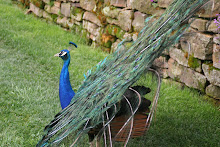
And finally - the kids favorite part.  Everyone gets a peacock feather from Bonnie H!


Friday, April 29, 2011

Tulip Time Lapse Project - Update

For my update - here are my starting and ending pictures.  I am putting them on a disk for John Makley and we will see what he can do to combined them with the shots he took and make an awesome video!

Not much change on the Allee


Some change in the Terrace Garden


Most change in the Sunken Garden


Friday, April 22, 2011

Tulip Time Lapse Project

Mr John Makley sent me an e-mail about a project he had envisioned on taking time lapse pictures of the tulip beds and putting them together for a short film.  He figured eight pictures a day for nine days.  Well, don't have to tell you how fast I signed up for this project!  A schedule was worked out and we marked the tripod spots for each shot.


First shot will be of the Allee


I thought we should add a few additional shots.. so we came up with

View toward the Terrace Garden


View in the Terrace Garden


And added a view of the Sunken Garden


Well folks, Hide and Watch what is to transpire.  Forecast is eight days of rain, so this should be an interesting endeavor!

Tuesday, April 19, 2011

Rose Garden - 1st pruning of the year

Kathy M and I had a great time giving the roses a good pruning today.  We had to cut the time short due to rain, but got done what we could.  The star of todays show was Kathy's new poka-doted boots!

Here is a picture of Don Miller and Kathy M hard at work showing me how it's done!


Wednesday, April 13, 2011

My day at Kingwood...Thyme in the Herb Garden

Wednesday was a cold, rainy and miserable weather day.  When hasn't it been lately in Ohio.  Radar said rain was headed out so we headed into the Herb Garden.  I was working on trimming the thyme clock.  Here is a picture of what I was aiming for.  With the on and off rain, we called it a day just after break so it didn't end up looking like this when I quit.  Bonnie H and I went to work on a sign project in the service building instead!

Thursday, April 7, 2011

Lett-us Plant Pansies

My partner in all good Kathy M and I volunteered ourselves to help out the Kingwood Staff planting seasonal pansies and lettuces.  Shawn McClain made sure the beds were prepared and the soil was fluffy soft.


 Next Bill Collins, Glenna Schaeffer, Charles Applegate and Don Miller laid out the designs.


and now we plant....
Do you want to live here Mr. Pansy?      Grow and thrive!


..with a chill in the air and an excitement to be outside ... we planted the Gazebo area....

We didn't worry about watering.  As Charles Applegate puts it, we would let God water the next day.

What's that Charles? ..a little thing called photosynthesis, means that you cannot bury the plant, the leaves need to be uncovered?  Got it.  Oh the things we learn! 

We moved on to the Old Herb Garden, or Bay Tree Garden or whatever the name of the day is for it.


After a break for lunch, in which Kathy ate fried clams with rice pudding and I had too many hash browns, we continued onto circled fountain area.  We weren't hungry any longer, but with full bellies, we weren't bending over as easy after lunch either.


The day moved on.. so did we, (though we were moving a little slower) up to the formal garden to finish up the beds for a job we considered well done! 

Wednesday, March 30, 2011

Gypsy Moths...

  ... are a real danger to the Kingwood trees.  Yesterday I spent the morning with Shawn hunting Gypsy Moth Egg Sacks.  I had been looking for them around Kingwood by myself with no success, so Shawn took time out of his busy day to hunt along side me until I was skilled in locating the potentially devastating egg sacks.  
We were up at the Gate House to make sure the doors were open for Tai Chi and that is where I found my first Gypsy Moth egg sack underneath the window ledge.  Shawn made sure to scrape off every egg.                                                                  
This one was my first find.  It includes the pupae shell case w/egg mass.
Below is my readings on the Gypsy Moth and Caterpillars.  I was going to break this up into a series, but here it is in total so you can read it when you have opportunity.

Section 1

Biology & Life Cycle

Gypsy moth undergoes four developmental life stages; these are the egg, larva (caterpillar), pupa, and adult. Gypsy moth females lay between 500 to 1,000 eggs in sheltered areas such as underneath the bark of trees. The eggs are covered with a dense mass of tan or buff-colored hairs. The egg mass is approximately 1.5 inches long and 0.75 inches wide. The eggs are the overwintering stage of the insect. Eggs are attached to trees, houses, or any outdoor objects. The eggs hatch in spring (April) into caterpillars.


Caterpillar (Larval Stage)


Gypsy moth caterpillars are easy to identify, because they possess characteristics not found on other leaf-feeding caterpillars. They have five pairs of blue dots followed by six pairs of red dots lining the back. In addition, they are dark-colored and covered with hairs. Young caterpillars primarily feed during the day whereas the older caterpillars feed at night. When present in large numbers, the older caterpillars feed day and night. Young caterpillars spread to new locations by crawling to the tops of trees, where they spin a silken thread and are caught on wind currents. Older caterpillars are approximately 1.5 to 2.0 inches long. Gypsy moth caterpillars do not produce a web, which distinguishes it from web-making caterpillars such as the Eastern tent caterpillar, Malacosoma americanum and the fall webworm, Hyphantria cunea. The Gypsy moth larval stage lasts approximately seven weeks.


Male Moth

Female Moth


In early summer (June to early July), Gypsy moth caterpillars enter a pupal or transitional stage. The pupae are dark brown, shell-like cases approximately two inches long and covered with hairs. They are primarily located in sheltered areas such as tree bark crevices or leaf litter. Adult Gypsy moths emerge from the pupae in 10 to 14 days. They are present from July into August. Females have white to cream-colored wings, a tan body, and a two-inch wingspan. Female Gypsy moths cannot fly. Males, which are smaller than females, with a 1.5-inch wingspan, are dark-brown and have feathery antennae. Both the adult female and male can be identified by the inverted V-shape that points to a dot on the wings.
Gypsy moth has only one generation per year. Gypsy moth populations will go through cycles in which the populations will increase for several years then decline, and then increase again. Area-wide outbreaks can occur for up to ten years, but generally population densities in localized areas remain high for two to three years.


Adapted from Entomology Fact Sheet, NHE-153 written by Raymond A. Cloyd and Philip L. Nixon, Department of Natural Resources and Environmental Sciences, University of Illinois, Urbana, Illinois, in cooperation with the Illinois Natural History Survey

Section II

Damage

The larva or caterpillar is the damaging stage as it eats the leaves of trees in the spring. They can consume tremendous amounts of leaf material. For example, Gypsy moth larvae can consume as much as one square foot of leaves per day. As a result, they produce a large amount of fecal (frass) material. When populations reach outbreak proportions, the caterpillars can completely defoliate host trees over a wide geographic area. Consistent or repeated defoliation over several years can have devastating effects, often leading to tree stress and death.

Gypsy moth damage

Gypsy moths have a wide host-range, which includes oak (Quercus sp.), crabapple (Malus sp.), linden (Tilia sp.), poplar (Populus sp.), beech (Fagus sp.), willow (Salix sp.), birch (Betula sp.), sweetgum (Liquidambar styraciflua), serviceberry (Amelanchier sp.), and hawthorn (Crataegus sp.). Trees less susceptible to attack by Gypsy moth are ash (Fraxinus sp.), sycamore (Platanus sp.), Indian bean (Catalpa sp.), honeylocust (Gleditsia sp.), dogwood (Cornus sp.), junipers (Juniperus sp.), yew (Taxus sp.), lilac (Syringa sp.), arborvitae (Thuja sp.), arrowwood (Viburnum sp.), and tulip tree (Liriodendron tulipifera).
Conifers are more susceptible to death than evergreens because they don't produce another flush of growth once defoliated. Conifers, such as pine (Pinus sp.) and spruce (Picea sp.), are unable to produce new leaves (needles) after defoliation as compared to deciduous trees. As a result, conifers can die after one severe defoliation.
The ecological and economic impact of Gypsy moth is a serious concern. Gypsy moth defoliation can change the complexity of understory growth thus resulting in an increase or decrease of certain fauna or flora. Consecutive defoliation can result in plant stress and possible death. Gypsy moth defoliation may predispose trees to attack by opportunistic insects or diseases. For example, Gypsy moth feeding can increase a tree's susceptibility to the attack by the shoestring fungus, Armillariella mellea and the two-lined chestnut borer, Agrilus bilineatus. In forested neighborhoods and urban parks, dead trees are a safety hazard. Large numbers of caterpillars are a nuisance and the hairs may cause skin and/or respiratory allergies. In addition, the fecal droppings can cover large areas and make it difficult to enjoy outdoor activities such as barbecues, swimming, and picnics. In fact, reduced attendance in recreational areas and/or resorts may occur during outbreaks.

Section III

Gypsy Moth Photos - not taken by me.

In spring when weather warms and
leaves open, caterpillars hatch from
eggs laid the previous summer.


Caterpillars feed on newly
expanded leaves.
 

About 7 weeks after egg hatch,
mature caterpillars stop feeding,
find a sheltered resing spot and
pupate, forming a protective shell.


Don't confuse Gypsy moth caterpillar with other leaf feeding caterpillars present in spring. Here is Eastern Tent Caterpillar, a web-forming caterpillar.


Section IV
Gypsy Moth Links

DuPage County Government
http://www.dupageco.org/
USFS Gypsy Moth Information
http://www.fs.fed.us/cgi-bin/texis/searchallsites/search.allsites/
?db=allsites&query=gypsy+moth

USFA Pest Alert - Gypsy Moth
http://na.fs.fed.us/spfo/pubs/fidls/gypsymoth/gypsy.htm
USFA Pest Alerts
http://www.fs.fed.us/na/morgantown/fhp/palerts/palerts.htm
USFS Handbook on Gypsy Moth
http://www.fs.fed.us/na/morgantown/fhp/gm/gmhb.htm
The Illinois Virtual Forest
http://ilvirtualforest.nres.uiuc.edu/
USDA Gypsy Moth in North America
http://www.fs.fed.us/ne/morgantown/4557/gmoth/
USDA Gypsy Moth Information
http://www.na.fs.fed.us/spfo/pubs/fidls/gypsymoth/gypsy.htm
IDA Gypsy Moth General Information
http://www.agr.state.il.us/Environment/Pest/gypsymoth.html
USDA Pheromone Control Information
http://www.ars.usda.gov/is/AR/archive/dec97/moth1297.htm
Illinois Landscape Contractors Association
http://www.ilca.net/


About Me

My photo
Volunteer, member, frequent visitor and photographer of Kingwood Center.